
Resumee based on an article by Simon Bradley on swissinfo.ch
Can deep geothermal projects help secure Swiss energy independence?
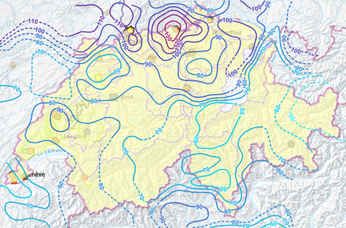
The war in Ukraine and the climate crisis have governments working to source more energy locally. Advocates for geothermal energy say it can help Switzerland do so but a “success story” is needed.
The Push for Energy Independence in Switzerland
Driven by the climate crisis and the need to reduce reliance on foreign energy imports (such as Russian gas), Switzerland is actively exploring deep geothermal energy. While low-depth geothermal sources (like residential heat pumps) are already in use, the country is trying to tap into much deeper underground heat to generate both electricity and large-scale heating. The government estimates that geothermal sources could eventually cover a substantial portion of the country's energy and heating needs by 2050.
Focus on the Haute-Sorne Project
While some Swiss projects simply extract naturally rising hot water, the deep geothermal project in Haute-Sorne relies on a different and more controversial method.
- The Relaunch: In February, the government of the canton of Jura decided to restart the deep geothermal project in Haute-Sorne, signaling a strong political will to develop the technology.
- The Method: The proposed plan involves injecting water up to 5,000 meters deep into the earth to capture geothermal heat.
- Public Pushback: This approach has sparked significant local concern and opposition. Critics, such as Jack Aubry (president of a local citizens' association in the Jura region), have heavily condemned the initiative, referring to the deep-water injection process as a "dangerous scientific experiment."
Broader Context and Challenges
The fears surrounding Haute-Sorne are rooted in recent Swiss history. Previous deep geothermal projects in Basel (2006) and St. Gallen (2013) that involved injecting water or hydraulic fracking triggered minor earthquakes and ultimately had to be abandoned. Because of this, projects like Haute-Sorne face major hurdles in public acceptance and environmental safety.
In contrast, other ongoing projects—such as the one in Lavey-les-Bains—are trying to avoid these risks by using a single borehole to extract existing hot water rather than actively reinjecting water back into geological faults.
Conclusion
Despite the exploratory risks and high financial costs, experts believe geothermal energy holds massive, untapped potential for Switzerland. However, for projects like Haute-Sorne to succeed and contribute to the country's long-term energy transition, the industry will need to prove it can operate safely and win over skeptical local communities.
The full article is available for free here