
Summary of the Article Published in "Geothermische Energie" No. 113 on 11 February 2026
Context and Objectives
Deep geothermal energy is a critical element of the energy transition, but traditional hydrothermal systems in Central Europe face high exploration risks due to a scarcity of natural hot water reservoirs. To address this, Geo-Energie Suisse (a consortium of Swiss energy suppliers) is pioneering Enhanced Geothermal Systems (EGS) in Switzerland. The Haute-Sorne pilot project, located in the Jura Canton, marks the first field-scale application of the innovative Multi-Stage Stimulation concept in the country, aiming to safely bring deep geothermal power to market maturity.
Key Findings from the Exploration Phase (2024–2025)
- Rapid Drilling Progress (in 2024): The initial deep exploration well (GVL 1) successfully reached its target depth of 4,000 meters in crystalline bedrock in less than three months. This incident-free milestone was accelerated by transferring technology from recent US EGS projects, utilizing optimized drilling parameters and PDC bits.
- Hydraulic Test Stimulations with Low Fluid Volumes (in 2025): Vertical test stimulations were performed using highly conservative injection rates (maximum 80 liters per minute, totaling only 430 cubic meters of water over a few days). By way of comparison: 12,000 liters were injected as part of the project in Basel.
- High Hydraulic Efficiency: Despite the modest volumes used the rock's transmissivity increased by a factor of 120 to 150, demonstrating exceptional hydraulic responsiveness.
- Minimal Induced Seismicity: The stimulation generated very low seismic activity. Out of 3,387 recorded micro-events, nearly all had negative magnitudes, with a maximum magnitude of M_w 0.3. This is far below the threshold of human perception, reflecting a seismic reactivity over 60 times lower than the Basel project.
Advanced Monitoring and Risk Mitigation
The project sets new European standards by deploying high-resolution monitoring systems.
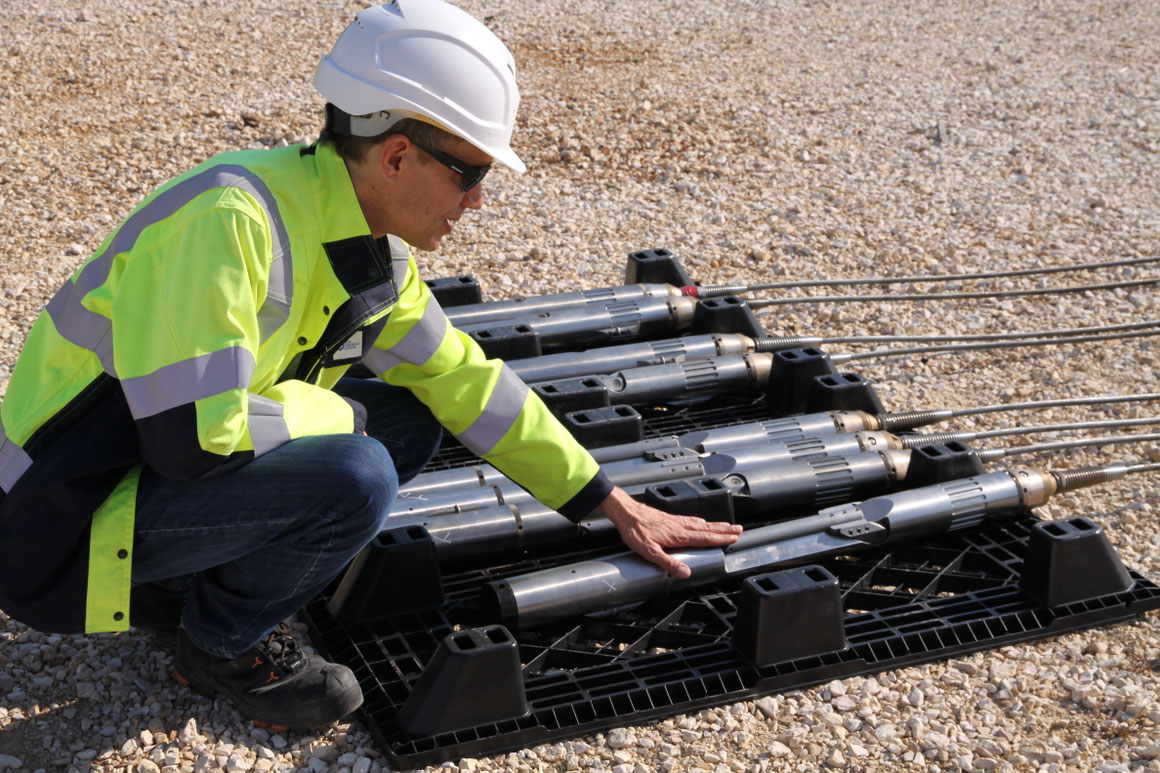
- Downhole geophone string and optical fiber: During testing, an 8-sensor downhole geophone string was lowered nearly 4,000 meters deep into the borehole alongside fiber-optic sensors to track real-time fracture propagation and temperature profiles.
- Adaptive Traffic LIght System (ATLS): This data feeds an Adaptive Traffic Light System (ATLS) capable not only of evaluating seismic activity but also of forecasting seismic trends and dynamically managing injection parameters. This marks one of the world's first field deployments of an ATLS during multi-stage stimulation.
Regulatory Transparency and Social Acceptance
Under a 2022 framework with the Jura Canton and independent oversight by the Swiss Seismological Service, the project prioritizes public trust by streaming seismic data to the web in near-real-time.
Conclusion and Economic Outlook
The successful conclusion of the exploration phase confirms that EGS projects can be developed safely, predictably, and economically in Europe, positioning Haute-Sorne as a technological blueprint for deep geothermal utilization. With a proven stable crustal block, optimal natural fracture networks, and an estimated temperature of 168 °C at 5,000 meters, the site has yielded a solid data foundation.
As soon as the authorities give the go-ahead, the project is set to move into Phase 2 (stimulation phase) from 2026, during which a second deep well with a horizontal section will be drilled. Supported by drilling cost reductions modeled after projects in Utah, electricity production costs are projected below 15 Rappen/kWh, with heightened profitability expected if co-generation (combined electricity and district heating) is implemented.
At the same time, new sites are already being assessed for future projects with a capacity of 10–30 MW.
