
An Analysis from France
According to an article in Le Monde by Olivier Laffargue
Why geothermal energy, a sustainable solution to the energy crisis, is struggling to take off: the explanation in four charts
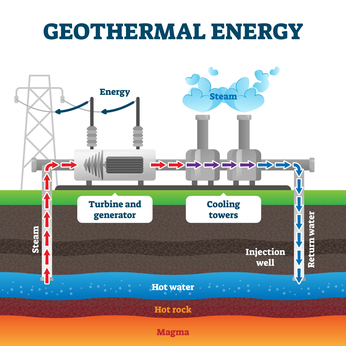
France’s energy consumption is heavily reliant on imported hydrocarbons, as demonstrated by the impact of the blockade of the Strait of Hormuz. Yet there is a carbon-free and largely untapped energy source beneath the soil of France: geothermal energy.
This article, published in Le Monde on 10 May 2026, analyses the paradox of an abundant and stable energy source that is nevertheless struggling to gain widespread acceptance in France, despite the energy crisis and the closure of the Strait of Hormuz.
1. A critical dependence on imported fossil fuels
The first observation concerns France’s energy vulnerability. Although nuclear power dominates the electricity sector, a vast proportion of the energy consumed by households (particularly for heating) remains dependent on imported gas and oil. Geothermal energy appears to be the only alternative capable of providing a constant supply of local, carbon-free base-load heating.
2. Untapped potential across the country
The graphs show that whilst certain regions, such as Île-de-France (the Paris Basin), are already using deep geothermal energy for district heating, vast areas with high potential remain entirely undeveloped. The article highlights a lack of precise mapping of the subsoil, which is holding back investment in less well-documented regions.
3. The main obstacle: initial investment costs
Unlike gas, where most of the cost is linked to consumption of the resource, geothermal energy requires a massive initial investment (drilling and infrastructure). The comparative graph of life-cycle costs reveals that whilst geothermal energy is more cost-effective over a 20-year period, the financial entry barrier and the risk of ‘unsuccessful drilling’ (failing to find water at the right temperature) still discourage local authorities and private investors.
4. Bureaucratic delays and a lack of industry infrastructure
The final explanation lies in the time taken to implement projects. Between feasibility studies, administrative approvals and the drilling work itself, a project can take more than ten years to come to fruition. Furthermore, France lacks qualified drillers and available machinery, creating a bottleneck that prevents a swift response to the climate emergency.
In summary:
The article concludes that without a strong public guarantee against the financial risk of drilling and a drastic simplification of planning procedures (as envisaged by the 2026 European action plan), geothermal energy will remain a ‘miracle solution’ confined to the ground.
The original article in Le Monde (in French, for subscribers only) can be found here.