
Safe and Affordable Geothermal Energy: the CH-AGENS Research Project
agEnS: Demonstration of an Adaptive, Multilateral Reservoir Characterisation for Geothermal Energy to Reduce Seismicity and Lower Costs
Geo-Energie Suisse AG is participating in the collaborative project agEnS. The project demonstrates the advantages of so-called multilateral reservoir appraisal. The aim is to significantly reduce both the seismic risk and the development costs associated with geothermal energy extraction.
What is it about?
Conventional geothermal projects usually make use of that are known as ‘duplets’, usually consist of two boreholes: a production well for extracting hot water from the subsurface and an injection well through which the cooled water is returned.
In conventional projects, however, there are factors that cause scepticism amongst the public, reduce social acceptance and may deter potential investors:
- High drilling costs, which are reflected significantly in the prices of the energy produced
- Large land requirements for such plants
- Seismic risks (possible earthquakes)
- Environmental risks (penetration of groundwater aquifers and other potential environmental hazards)
The agEnS research project
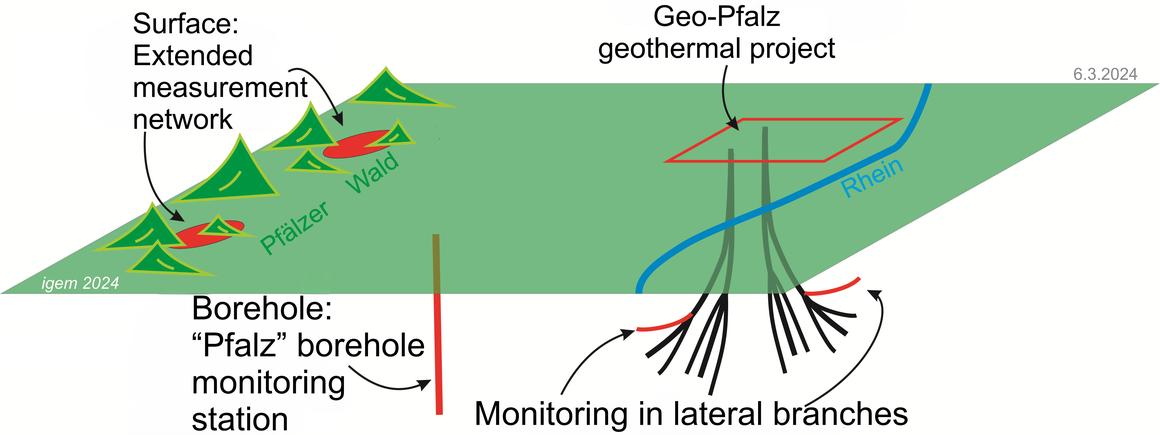
The agEnS research project addresses precisely these points of criticism raised by the public, authorities and investors. The research project aims to demonstrate that costs, land requirements, seismic risks and groundwater hazards can be significantly reduced. This is achieved by equipping vertical boreholes with not just one, but several lateral branches. The project is being carried out by a consortium and is planned for a fault zone in Speyer/Schifferstadt (Upper Rhine Graben).
The technical contribution of Geo-Energie Suisse AG
knowledge and considerable experience in the fields of geothermal drilling and safety concepts from its projects in Haute-Sorne and Utah FORGE (USA). As a project partner of agEnS, it is now applying this expertise specifically to the instrumentation for project monitoring and to data analysis.
Knowledge exchange
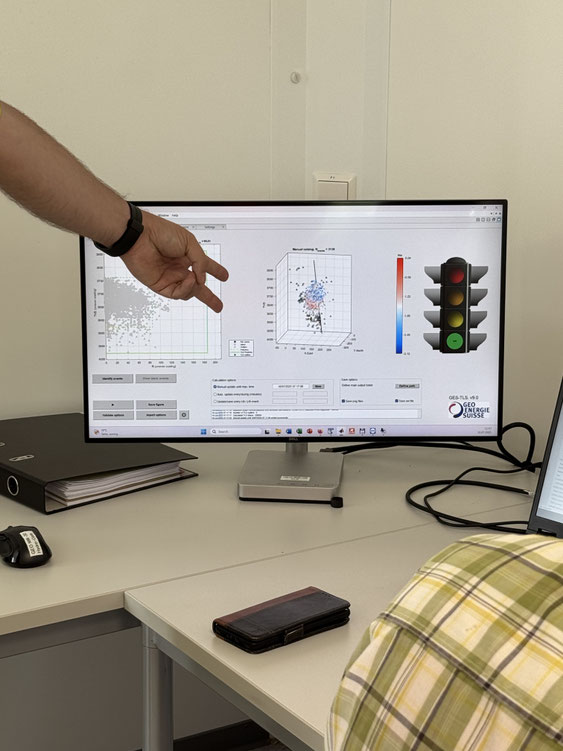
Geo-Energie Suisse AG supports the project with its practical experience gained at the ETH Zurich Bedretto Rock Laboratory, from Utah FORGE and Haute-Sorne. The focus here is on the design of the monitoring systems and the professional handling of the measurement data obtained. In return, the findings from the agEnS project are fed directly into the Swiss geothermal projects in Riehen (in German) and Haute-Sorne (in French), as well as other sites. Thanks to this valuable knowledge transfer, the CH-AGENS research project receives financial support from the Swiss Federal Office of Energy (SFOE).
Find out more
The agEnS research project (in German)